Sport under unexpected circumstances: violence, discipline, and leisure in penal and internment camps
Sport was an integral part of life in camps during the twentieth century, even in Nazi concentrations camps or in the Soviet Gulag. Traditionally perceived as a symbol of equality, play, and peacefulness, sport under such unexpected circumstances irritates most observers, back then and today. This v...
Gespeichert in:
| Weitere Verfasser: | , , |
|---|---|
| Dokumenttyp: | Konferenzschrift Sammelband |
| Sprache: | Englisch |
| Veröffentlicht: |
Göttingen
Vandenhoeck & Ruprecht
[2018]
|
| Schriftenreihe: | Veröffentlichungen des Instituts für Europäische Geschichte Mainz Beiheft Abteilung für Universalgeschichte
119 |
| In: |
Veröffentlichungen des Instituts für Europäische Geschichte, Mainz / Beiheft (119)
|
| Volumes / Articles: | Show Volumes / Articles. |
| DOI: | 10.13109/9783666310522 |
| Schlagworte: | |
| Online-Zugang: | Resolving-System, kostenfrei: https://doi.org/10.13109/9783666310522 Cover: https://navision.backoffice.cloud.brill.com/media/300dpi_large_rgb/978-3-666-31052-2.jpg 
|
| Verfasserangaben: | edited by Gregor Feindt, Anke Hilbrenner, and Dittmar Dahlmann |
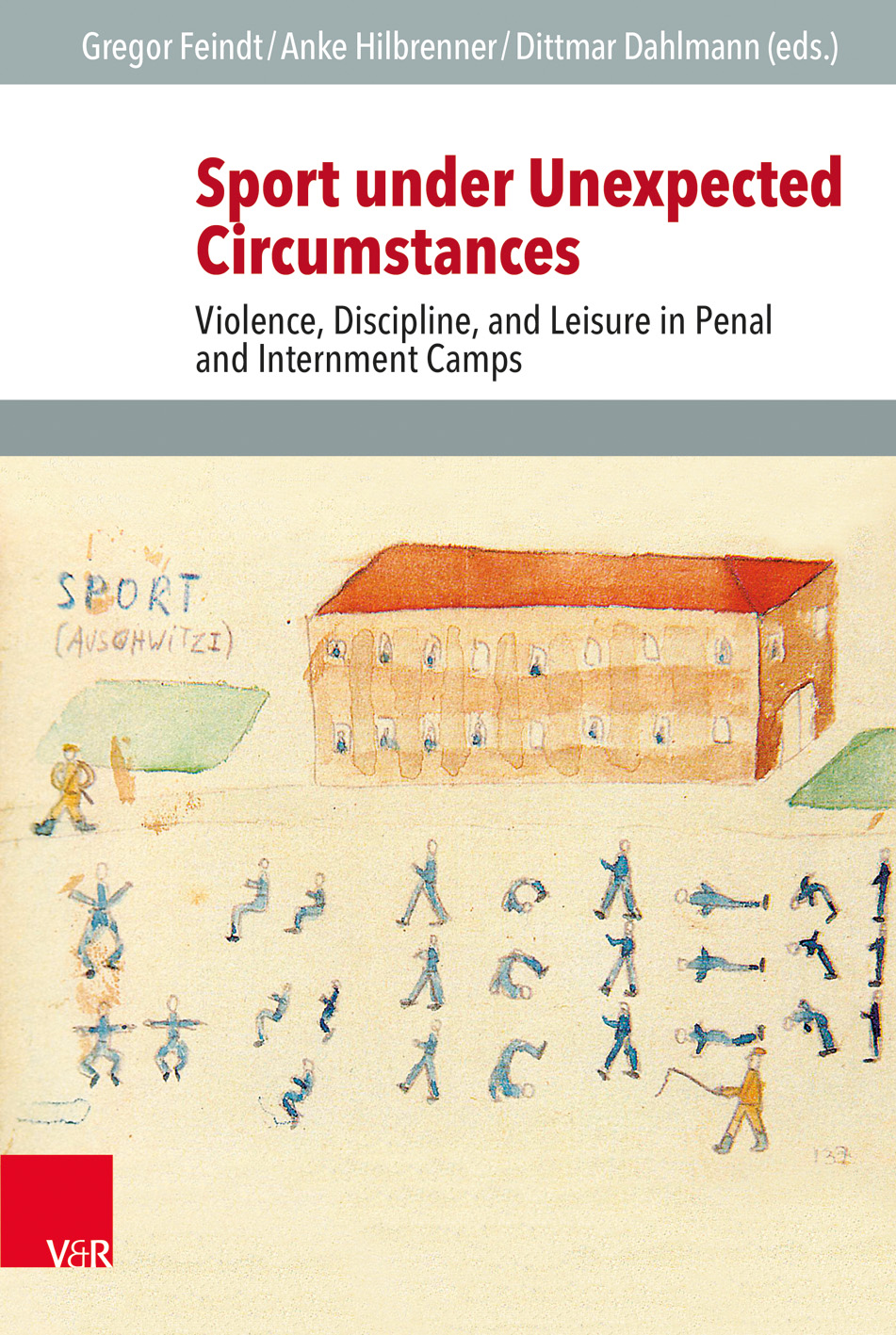
| Zusammenfassung: | Sport was an integral part of life in camps during the twentieth century, even in Nazi concentrations camps or in the Soviet Gulag. Traditionally perceived as a symbol of equality, play, and peacefulness, sport under such unexpected circumstances irritates most observers, back then and today. This volume studies the irritating fact of sport in penal and internment camps as an important insight into the history of camps. The authors enquire into case studies of sport being played in different forms of camps around the globe and throughout the twentieth century. They challenge our understanding of camps, question the dichotomy of insiders and outsiders, inner-camp hierarchies, and the everyday experience of violence. This fresh perspective complements the existing camp studies and gives way for the subjectivity of camp inmates and their action.; Sport was an integral part of life in camps during the twentieth century, even in Nazi concentrations camps or in the Soviet Gulag. Traditionally perceived as a symbol of equality, play, and peacefulness, sport under such unexpected circumstances irritates most observers, back then and today. This volume studies the irritating fact of sport in penal and internment camps as an important insight into the history of camps. The authors enquire into case studies of sport being played in different forms of camps around the globe and throughout the twentieth century. They challenge our understanding of camps, question the dichotomy of insiders and outsiders, inner-camp hierarchies, and the everyday experience of violence. This fresh perspective complements the existing camp studies and gives way for the subjectivity of camp inmates and their action. |
|---|---|
| Beschreibung: | Literaturangaben |
| Beschreibung: | Online Resource |
| ISBN: | 9783666310522 |
| DOI: | 10.13109/9783666310522 |